
Menstrual Irregularities
Menstrual Irregularities Treatment in Raipur
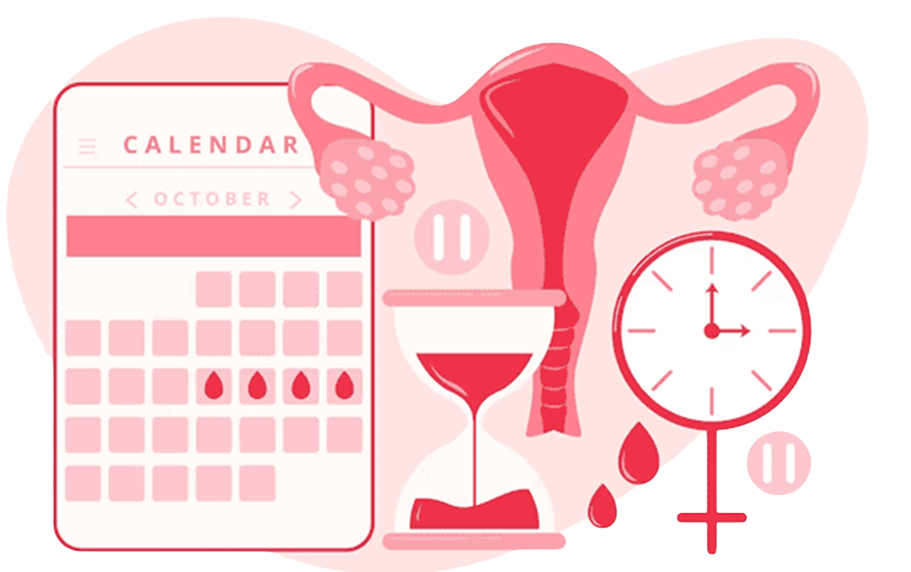
Menstrual irregularities refer to changes in the frequency, duration, or flow of periods that fall outside a typical, predictable pattern. Occasional variation is normal, but persistent irregularity often points to an underlying hormonal cause that’s worth investigating rather than ignoring.
Book an Appointment
With Dr. Shilika Lalwani
Call / WhatsApp
+91 62640 89752
Causes
- PCOS — one of the most common causes of irregular periods
- Thyroid disorders
- Perimenopause (the transition period before menopause)
- Prolactin or other hormonal imbalances
- Structural causes, such as fibroids or polyps, in some cases
Types
Oligomenorrhea
infrequent periods
Amenorrhea
absence of periods for three months or more
Menorrhagia
unusually heavy or prolonged bleeding
Irregular cycle length
periods that vary unpredictably in timing
Symptoms to Watch For
- Periods that are consistently early, late, or unpredictable
- Missed periods without pregnancy
- Unusually heavy bleeding or bleeding lasting longer than a week
- Spotting between periods
- Menstrual changes alongside other symptoms like acne, excess hair growth, or unexplained weight change

Diagnosis

Detailed menstrual history
pattern, duration, and any associated symptoms
Blood tests
hormone levels, including thyroid function and, where relevant, prolactin and androgen levels
Ultrasound
to assess the ovaries and uterus for structural causes
Additional testing
based on individual findings, such as evaluation for PCOS or perimenopause
Treatment & Management
Treatment depends entirely on the underlying cause identified through evaluation:
- Addressing hormonal imbalances, such as thyroid disorders or PCOS, at the root
- Structured plans for cycle regulation based on your specific goals — whether that's predictability, reduced bleeding, or fertility
- Monitoring and management of perimenopausal changes as they occur
- Referral for structural causes, such as fibroids, when relevant
- Ongoing follow-up to confirm the plan is working as expected


When to Seek Help
Consider an evaluation if you:
- Have missed three or more periods without pregnancy
- Have periods that are significantly heavier, longer, or more irregular than usual
- Experience menstrual changes alongside other symptoms like excess hair growth, acne, or unexplained weight change
- Are approaching your 40s and noticing new, unpredictable cycle changes
Why Choose Oraya Clinics
Thorough hormonal evaluation for menstrual irregularities from Dr. Shilika Lalwani, rather than treating symptoms in isolation
Identification of underlying causes like PCOS, thyroid disorders, or perimenopause
Personalised treatment goals — cycle regulation, symptom relief, or fertility support
Coordinated care when menstrual irregularities overlap with other hormonal conditions
Frequently Asked Questions
Is it normal for periods to be slightly irregular sometimes?
Yes, occasional variation is common and not usually a concern. Persistent irregularity over several months is what typically warrants evaluation.
Can stress alone cause irregular periods?
Yes, significant stress can temporarily affect the menstrual cycle. However, if irregularity continues, it’s worth ruling out other hormonal causes.
Is heavy bleeding always something to worry about?
Not always, but bleeding that’s significantly heavier than your usual pattern, or that affects your daily activities, should be evaluated.
Can irregular periods affect my ability to conceive?
They can, particularly if the underlying cause affects ovulation. Identifying and addressing the cause is often an important step for those trying to conceive.